
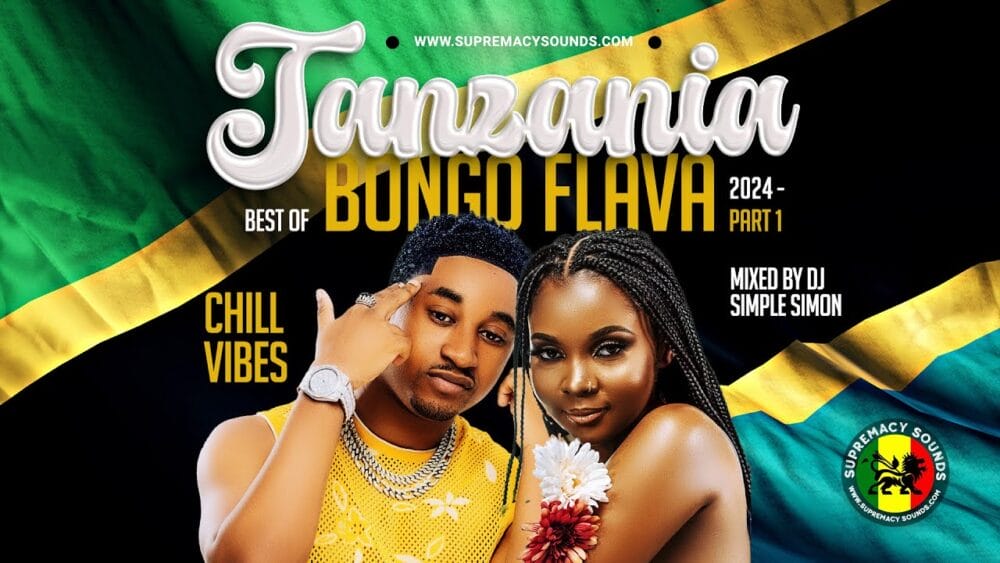
Introduction: The Soulful Rise of Tanzania’s Bongo Flava
In the sun-drenched streets of Dar es Salaam, long before the glow of smartphones illuminated late-night vibes or algorithms dictated playlists, Tanzania was already pulsing with its own unbreakable rhythm. This was an era untouched by global streaming giants, where cassette tapes passed hand-to-hand in bustling markets, and makeshift sound systems blared from matatu speakers under the shade of mango trees. Youngsters gathered in dimly lit corners of Kariakoo, trading rhymes over bootleg beats sampled from smuggled American rap tapes, while elders nodded to the familiar lilt of taarab drifting from nearby radios. It was here, amid the vibrant chaos of coastal life, the call of street vendors, the hum of bajaji engines, and the salty breeze off the Indian Ocean that a new generation of dreamers forged a sound from the raw materials of their reality. They blended the grit of urban hustle with the poetic flow of Swahili linguistics, turning tales of love, loss, and ambition into verses that felt both intimate and universal. Bongo Flava emerged not as an import, but as a homegrown revolution, transforming everyday struggles into anthems of resilience and joy, and laying the foundation for Tanzania’s sonic dominance long before Afrobeats claimed the world’s airwaves.
By the late 1990s, Bongo Flava had solidified as East Africa‘s undisputed heartbeat, a genre crafted exclusively for the youth and by the youth who lived it. It wove together the unapologetic swagger of American hip-hop, the melodic sweetness of R&B harmonies, and the deep-rooted cadences of Tanzania’s taarab and dansi traditions, creating a tapestry rich with cultural layers. Pioneers like Professor Jay delivered sharp, socially conscious rhymes that tackled poverty, corruption, and empowerment, using wordplay that cut through societal noise like a machete through underbrush. Meanwhile, groups such as TMK and Mr. II set the stage with infectious hooks and danceable grooves that turned neighborhood parties into communal celebrations. What began in dimly lit underground studios, fueled by second-hand equipment, sheer determination, and late-night creativity sessions, quickly spilled onto radio waves and concert stages. Artists hustled from open-mic nights in local clubs to regional tours, evolving from local curiosity to a regional phenomenon that resonated across borders, inspiring imitators in Kenya, Uganda, and beyond with its relatable narratives and irresistible energy.
Yet Bongo Flava transcended mere music; it ignited a cultural movement that championed the Swahili language as a vessel for modern expression, wove ancient African storytelling into contemporary narratives, and forged a bold, uncompromised identity for Tanzanian pop culture. It celebrated the beauty of local dialects — from the rhythmic slang of the streets to the proverbial wisdom of village elders — and elevated them into global conversations. This was more than entertainment; it was empowerment, giving voice to the voiceless and pride to a nation emerging from post-colonial shadows. It created a bridge between authentic roots and global ambitions, demonstrating that true innovation blooms when you honor your origins rather than erase them. Artists like Ali Kiba and Vanessa Mdee exemplified this balance, blending traditional instruments such as the zeze or ngoma drums with synthesizers and auto-tune, proving that cultural fusion could be both revolutionary and respectful — a lesson that empowered countless creators to amplify their voices without apology or compromise.
Today, Bongo Flava endures as one of Africa’s most versatile and influential musical exports, continually spawning fresh fusions like AfroBongo that blend its core with pan-continental sounds, from Amapiano pulses to Highlife melodies. From sold-out arenas in Nairobi to chart-topping collaborations in Lagos, Johannesburg, and even Los Angeles, it remains soulful, adaptable, and unequivocally Tanzanian. Newer stars like Harmonize, Rayvanny, and Zuchu carry the torch, pushing boundaries with visual storytelling in music videos that showcase Tanzania’s landscapes and fashion, while streaming platforms finally catch up to what street kids knew decades ago. It stands as a testament to the power of homegrown creativity in shaping the future of global music, reminding the world that the most enduring rhythms are those born from the soul of a people — unfiltered, unbreakable, and eternally in motion.
The Origins: When Hip-Hop Met Swahili Soul
In the late 1990s, Tanzania stood at a cultural crossroads, where the echoes of American hip-hop and R&B cassettes smuggled through ports and markets collided with the soulful undercurrents of local Swahili expression. Dar es Salaam, the bustling heart of the nation, became a laboratory for sonic experimentation — young people in faded jeans and kangas gathered in backyards and dimly lit studios, sampling beats on battered keyboards while layering them over the poetic cadence of their mother tongue. This wasn’t mere imitation; it was reinvention. The youth, shaped by post-independence optimism and the harsh realities of economic reform, craved a voice that could articulate their ambitions and frustrations in a language that felt like home. What emerged was a hybrid pulse — raw, relatable, and rhythmically irresistible — laying the groundwork for a genre that would soon define an entire generation’s identity.
Pioneers like Mr. II (Sugu), Professor Jay, and Juma Nature stepped forward as the architects of this movement, fusing hip-hop’s narrative grit with the intricate lyrical depth of Swahili poetry. Mr. II brought streetwise bravado and political bite, Professor Jay wove socially conscious tales that exposed corruption and inequality with razor-sharp wordplay, and Juma Nature infused romantic vulnerability into hard-hitting bars. Their tracks weren’t polished products of corporate labels but gritty anthems born from personal experience — songs about hustling in Kariakoo markets, navigating love in a conservative society, or dreaming beyond the Indian Ocean horizon. These artists transformed everyday Swahili slang, proverbs, and idioms into powerful hooks, making complex emotions accessible and turning personal stories into collective catharsis that resonated far beyond Tanzania’s borders.
The spark ignited on the airwaves of Dar es Salaam’s fledgling radio stations like Clouds FM and Radio One, where DJs spun these fresh tracks alongside international hits, creating a bridge between global influences and local flavor. Mixtapes circulated like currency in schools and matatu rides, while open-air performances in community centers and street ciphers under acacia trees turned passive listeners into active participants. Word-of-mouth fueled the fire — from coastal towns to upcountry villages, the sound traveled via bootleg cassettes and early mobile ringtones. What began as an urban youth subculture in the capital’s vibrant neighborhoods swiftly evolved into a nationwide phenomenon, uniting diverse tribes and classes under a shared sonic banner. This organic spread solidified the Bongo Flava identity: a genre not just of music, but of rhythm, unfiltered truth, and unapologetic Tanzanian pride.
By the dawn of the new millennium, Bongo Flava had transcended its underground roots to become a cultural force, influencing fashion with baggy attire and bling, inspiring slang that peppered daily conversations, and even shaping political discourse through its fearless commentary. It empowered a generation to claim their narrative in a globalizing world, proving that authenticity could conquer airwaves without compromise. From those humble beginnings in Dar es Salaam’s creative cauldron, the genre set the stage for future stars and international breakthroughs, forever etching Swahili soul into the annals of African music history.
The Evolution: From Bongo Flava to AfroBongo
The 2010s ushered in a seismic shift for Bongo Flava, as Tanzania’s sound began to ripple beyond East Africa into the expanding ocean of global African music. The rise of social media, YouTube, and streaming platforms dismantled geographical barriers, exposing Tanzanian artists to the pulsating beats of Afrobeats from Nigeria, the log-drum grooves of South African amapiano, and the infectious riddims of Jamaican dancehall. No longer content with local dominance, a new generation of creators sought to refine the raw energy of classic Bongo Flava into something sleeker, more radio-ready, and universally danceable. This wasn’t abandonment of tradition but strategic evolution — retaining the lyrical poetry of Swahili while wrapping it in glossy, high-definition production. Thus, AfroBongo was born: a polished, genre-fluid movement that honored its roots while stepping confidently onto the world stage.
At the forefront of this transformation stood Diamond Platnumz, the undisputed king of modern Tanzanian music and the architect of AfroBongo’s global blueprint. With his label Wasafi and a relentless work ethic, Diamond fused Bongo Flava’s melodic storytelling with Afrobeats’ rhythmic bounce and R&B’s emotional sheen. Hits like Number One, Nana, and Yope became continental anthems, racking up hundreds of millions of views and earning collaborations with heavyweights like Rick Ross, Ne-Yo, and Davido. His music videos — cinematic spectacles shot in Dubai, Johannesburg, and Dar es Salaam — elevated visual storytelling to match the sound, turning songs into cultural events. Diamond didn’t just ride the wave; he redirected the current, proving that Tanzanian artists could lead, not follow, in the pan-African music conversation.
Behind the artists were visionary producers like Lizer Classic and Abbah Process, the sonic engineers who modernized Bongo Flava’s DNA. Lizer’s crisp percussion and atmospheric synths gave tracks a futuristic edge, while Abbah’s knack for blending live instrumentation — from ngoma drums to zeze strings — with digital effects created a signature warmth that felt both nostalgic and forward-thinking. Together, they built the Wasafi sound, a template adopted across East Africa. This production renaissance empowered a new class of stars like Harmonize, Zuchu, Mbosso, and Nandy. Their songs dominated charts in Kenya, Uganda, and Rwanda, while Tetema (Rayvanny ft. Diamond) became a pan-African dance craze.
The result was a genre that could compete on Billboard’s global charts while still feeling like home. AfroBongo retained Swahili lyricism, rich with metaphor, humor, and cultural nuance — but now delivered through universal rhythms that made bodies move from Lagos nightclubs to London basements. It bridged generational gaps too: elders appreciated the respect for language and melody, while Gen Z embraced the high-energy drops and TikTok-friendly hooks. Festivals like Fiesta in Dar es Salaam and Wasafi Festival became pilgrimage sites for fans across the continent, showcasing lineups that rivaled any international music event.
Today, AfroBongo stands as a living testament to evolution without erasure. It’s a sound that dances between worlds — local and global, traditional and futuristic — without ever losing its Tanzanian heart. From Diamond Platnumz headlining Madison Square Garden to Zuchu going viral in Brazil, the genre continues to expand, inspire, and redefine what African pop can be. Bongo Flava didn’t fade; it transformed, and in doing so, secured Tanzania’s permanent seat at the table of global music royalty.
The Culture: Swahili Pride and Storytelling Power
At its core, Bongo Flava is more than music; it is a living celebration of Swahili identity, a cultural declaration that the language of East Africa’s coast can carry the weight of modern emotion, ambition, and truth. Swahili, with its melodic flow, layered proverbs, and rhythmic cadence, becomes the soul of every verse. Lyrics are not written to impress with complexity but to connect with clarity — using everyday metaphors drawn from fishing boats, matatu rides, and village weddings. This linguistic authenticity transforms songs into portable pieces of Tanzanian life, preserving oral traditions in a digital age. Whether whispered in a lover’s ear or shouted in a stadium, Swahili in Bongo Flava feels both ancient and urgently contemporary, a bridge between generations and a banner of cultural pride.
The genre’s true power lies in its storytelling — a tradition rooted in Africa’s griot heritage but electrified for the urban present. Every track is a short film: vivid, compact, and emotionally charged. Professor Jay, often called the “Conscious King,” used razor-sharp narratives to dissect corruption, poverty, and youth disillusionment in songs like Nikikutika and Parliament, turning social critique into anthems that educated as much as they entertained. His delivery — calm, deliberate, almost professorial — made heavy topics accessible, sparking conversations in classrooms and tea stalls alike. Meanwhile, Alikiba, the prince of melody, painted romance with poetic tenderness in ballads like Mwana and Aje, wrapping heartbreak and devotion in silk-smooth harmonies that made listeners believe in love again. These stories weren’t abstract; they reflected real lives — the student cramming for exams, the boda boda driver chasing dreams, the mother praying for her children’s future.
Bongo Flava speaks directly to its people in a voice that feels both personal and communal, creating a shared emotional vocabulary. A line from Vanessa Mdee’s Nobody But Me might empower a young woman in Arusha to demand respect, while Nay Wa Mitego’s fiery Wanaume series challenges toxic masculinity in bars across Mwanza. The genre thrives on duality: party songs like Rayvanny’s Kwetu ignite dance floors with infectious joy, yet even in celebration, there’s depth — gratitude for survival, pride in origin, love for community. This balance of rhythm and responsibility ensures that no song is empty. It teaches resilience, honors family, critiques power, and uplifts the spirit, all within a three-minute hook.
Beyond the sound, Bongo Flava serves as a mirror for Tanzanian society — reflecting its beauty, contradictions, and aspirations with unflinching honesty. It gives voice to the voiceless: the street vendor, the single mother, the artist grinding in a one-room studio. Through music videos shot in local neighborhoods, fashion inspired by kanga prints and kitenge patterns, and slang that evolves faster than dictionaries can track, the genre documents cultural evolution in real time. It has elevated Swahili from a regional language to a global artistic force, heard in collaborations from Johannesburg to Los Angeles. When Diamond Platnumz sings in Swahili on a track with Rick Ross, or Zuchu trends worldwide with Sukari, they’re not just exporting music; they’re exporting identity, proving that a language spoken by over 100 million people deserves its place in the global spotlight.
Ultimately, Bongo Flava is culture in motion — a movement that blends rhythm with purpose, pride with progress, and storytelling with soul. It reminds the world that music can entertain and enlighten, unite and uplift, all while staying fiercely true to its roots. In every beat, every metaphor, every heartfelt chorus, Tanzania speaks, and the world listens.
The Global Impact: Tanzania’s Voice Across Borders
Today, Bongo Flava reverberates far beyond the shores of East Africa, its Swahili-infused beats pulsing through speakers from Lagos to London, Nairobi to New York. The digital revolution — led by streaming giants like Spotify, Apple Music, and YouTube — has demolished geographical walls, turning local anthems into global obsessions overnight. What once required physical cassettes and radio airplay now spreads with a single upload, reaching millions within hours. Tanzanian artists have seized this moment, transforming their homegrown sound into a passport that carries culture, language, and emotion across continents. Bongo Flava is no longer just Tanzania’s voice — it’s a vital thread in the global tapestry of African music, proving that rhythm born in Dar es Salaam can move the world.
At the forefront of this international surge stands Diamond Platnumz, the undisputed global face of Tanzanian music. With over 2 billion YouTube views and collaborations with Davido, Ne-Yo, Rick Ross, and Burna Boy, he has turned Swahili lyrics into a universal language of love, hustle, and celebration. His Wasafi empire — encompassing record labels, media, and festivals — operates like a multinational brand, launching artists into stardom and setting trends in fashion, dance, and production. Rayvanny follows closely with infectious hits like Tetema and Corona, while Harmonize brings soulful depth through tracks like Uno and Amelowa. Zuchu, the voice of a new generation, captivates with melodic vulnerability in Sukari and Nyumba Ndogo earning praise from global tastemakers. Together, they’ve made Swahili not just heard — but felt — in clubs, cars, and playlists worldwide.
Digital platforms have been the rocket fuel behind this expansion. YouTube remains the primary stage, where cinematic music videos shot against Tanzania’s turquoise coasts or urban skylines rack up hundreds of millions of views. Boomplay and Audiomack dominate African streaming, with Bongo Flava consistently topping East African charts and infiltrating West African playlists. TikTok has turned short clips of dance challenges — from the Mapoz shoulder shimmy to the Lowa footwork — into viral phenomena, spreading choreography and catchphrases across borders. These tools have democratized access, allowing independent artists like Marioo, Billnass, and Maua Sama to bypass traditional gatekeepers and build global fanbases from their bedrooms.
The influence now flows both ways: Bongo Flava shapes and is shaped by the broader African soundscape. In Kenya, artists like Otile Brown and Bahati blend Bongo melodies into Afro-fusion; in Uganda, Sheebah and John Blaq adopt its romantic lyricism; and in Nigeria, R&B-leaning Afrobeats producers cite Diamond’s vocal layering as inspiration. Meanwhile, South African amapiano DJs remix Bongo classics, and European house producers sample Swahili hooks. Bongo Flava stands proudly as East Africa’s greatest musical ambassador — a bridge between local emotion and global innovation, between tradition and the future. It has not just crossed borders; it has redrawn them, proving that Tanzania’s rhythm is now part of Africa’s shared heartbeat — and the world’s.
Conclusion: From Dar es Salaam to the World — The Enduring Legacy of Bongo Flava
Bongo Flava’s extraordinary journey is far more than the evolution of a music genre — it is the living soundtrack of Tanzania’s transformation, a sonic chronicle of a nation rising from the vibrant streets of Dar es Salaam to the dazzling heights of global stardom. What began in the late 1990s as a raw, rebellious fusion of American hip-hop swagger and Swahili poetic soul has matured into one of Africa’s most dynamic and influential pop movements. From makeshift studios powered by generators to sold-out arenas in Dubai and Los Angeles, Bongo Flava has carried the dreams, struggles, and triumphs of an entire generation across oceans and borders. It stands not just as entertainment, but as a cultural revolution — proof that music born in the heart of East Africa can reshape the global soundscape and inspire millions to embrace their own roots with pride.
The genre’s legacy is built on the shoulders of fearless pioneers who dared to speak truth in their mother tongue. Mr. II (Sugu) brought political fire and street wisdom, Professor Jay delivered consciousness with clarity, and Alikiba wrapped romance in velvet melodies — together laying a foundation of authenticity that no trend could erode. Then came the global torchbearers: Diamond Platnumz, the visionary mogul who turned Wasafi into a pan-African empire; Harmonize, the soulful rebel with a golden voice; Rayvanny, the dance commander; and Zuchu, the melodic storyteller redefining femininity in African pop. Each phase — from classic Bongo Flava to the sleek, boundary-blurring AfroBongo — reflects an unwavering commitment to evolution without compromise, to innovation grounded in identity, and to rhythm that honors both tradition and the future.
At its deepest core, Bongo Flava is a triumphant celebration of Swahili pride — a powerful reminder that language is not a barrier but a bridge. Every lyric, whether about love in a coastal village, hustle in Kariakoo, or resilience in the face of hardship, pulses with emotional truth that transcends translation. It has elevated Swahili from local dialect to global artistic currency, heard in collaborations with Rick Ross, Davido, and Burna Boy, and danced in clubs from Tokyo to Toronto. This is music that teaches, heals, and unites — turning personal stories into universal anthems, and everyday life into poetry. In a world often dominated by English-language pop, Bongo Flava boldly declares: we are here, we are proud, and we will be heard — in our own voice.
The influence of Bongo Flava now ripples across the continent and beyond, shaping the very DNA of modern African music. Kenya’s Gengetone, Uganda’s Afro-pop, and even Nigeria’s R&B-leaning Afrobeats carry echoes of its melodic structure, lyrical depth, and production finesse. Young artists in Ghana, South Africa, and Rwanda cite Diamond and Harmonize as inspirations, while global producers sample Bongo beats in EDM and hip-hop tracks. Festivals like Wasafi Festival and Fiesta have become cultural pilgrimages, drawing fans from across Africa and the diaspora. Streaming platforms report Bongo Flava as one of the fastest-growing African genres, with billions of streams and viral dance challenges spreading its reach daily. This is no longer just Tanzanian music — it is a movement that redefines what African pop can be.
From the dusty corners of Sinza to the bright lights of international stages, Bongo Flava continues to grow, adapt, and inspire — a living legacy that refuses to be confined by time or borders. It reminds the world that Africa’s music doesn’t merely follow global trends — it creates them, leads them, and redefines them with soul, style, and unapologetic authenticity. As long as the Swahili beat keeps playing — in homes, headphones, and hearts around the globe — the world will keep dancing to the rhythm of Tanzania. This is not the end of the story. This is Bongo Flava, forever in motion, forever home.
Read More: The Role of Streaming Platforms in Promoting African Music Globally in 2025
The post The Rise and Legacy of Bongo Flava: Tanzania’s Sound of Pride and Passion appeared first on tooXclusive.
Disclaimer:The opinions presented in this post are those of the mentioned author. The content has been sourced from TooXclusive, with due attribution to the company.
If you wish for us to take down this content, kindly get in touch as soon as possible. This material is shared strictly for promotional purposes only.