

Introduction: When the World Finally Looked Our Way
Afrobeats did not emerge from a moment of international curiosity or a strategic push toward global markets. It was born organically, rooted deeply in everyday African life, long before the world began to pronounce its name correctly. In cities across Nigeria, Ghana, and beyond, the sound lived in crowded buses with blown speakers, in wedding halls where joy spilled into sweat and dance, in roadside bars, campus hostels, and late-night radio shows that shaped taste long before algorithms existed. These songs were made for people who understood the slang without subtitles and felt the rhythms without explanation. Afrobeats was never designed to be exported; it was designed to be lived. By the time the global spotlight arrived, the genre had already built its own history, culture, and emotional language, one that needed no external permission to feel complete.
Before Western playlists and chart positions became talking points, Afrobeats had already gone through several reinventions driven by local realities. Sounds shifted with changing generations, economic moods, and cultural influences, blending highlife, hip-hop, dancehall, R&B, and indigenous rhythms into something fluid and constantly evolving. Artists experimented freely, sometimes missing, sometimes redefining the mainstream entirely, but always speaking directly to their immediate audience. The genre’s growth was not linear or neatly documented; it was messy, communal, and deeply human. This independence meant Afrobeats matured without a global rulebook, guided instead by street credibility, club reactions, and the emotional resonance of songs that mirrored everyday African life.
The moment the world finally turned its gaze toward Afrobeats, it did not simply bring applause; it reshaped the language around success. International chart placements, festival bookings, and award nominations became new markers of achievement, often treated as proof that the music had “arrived.” For many artists, breaking into Western markets symbolized a long-overdue recognition of African creativity on a global scale. But this recognition also came with subtle pressures: to sound more polished, more universal, more legible to foreign audiences. What once thrived on cultural specificity now had to navigate expectations that were not always aligned with its original spirit.
As global attention grew, a quiet tension began to surface within the Afrobeats ecosystem. Dominance at home, once the ultimate measure of impact, started to feel secondary to international validation. Songs that resonated deeply on African streets sometimes received less celebration than those that performed well abroad. This shift raised difficult questions about who gets to define success and whose approval truly matters. Was Afrobeats still speaking first to its people, or was it slowly being reoriented toward an external gaze? The balance between global expansion and cultural ownership became increasingly fragile, even as the genre continued to thrive commercially.
Today, the conversation around Afrobeats is no longer about whether it belongs on the world stage; that debate has been settled by sheer presence and influence. Instead, the more complex question is about control and identity. How does Afrobeats continue to travel freely without being reshaped by foreign expectations? How does it remain rooted while being global, familiar while still evolving? As the genre stands at the intersection of local pride and global ambition, its greatest challenge may not be breaking new boundaries, but protecting the soul that existed long before the world finally looked its way.
Understanding Western Validation in Afrobeats: How Global Approval Became the New Measure of Success
Western validation in Afrobeats usually shows up in very specific, highly recognizable ways. Billboard chart placements, Grammy nominations, late-night television performances, glossy magazine covers, European festival slots, and high-profile collaborations with global pop stars have become the standard symbols of arrival. These milestones are not meaningless. They bring money, visibility, and access to audiences that were previously unreachable. For many artists who spent years navigating weak industry structures, limited distribution, and little institutional support at home, these moments feel like proof that the struggle was worth it.

Over time, though, these external markers have quietly become the dominant measuring stick for success. A song can dominate African radio, shape club culture, and soundtrack an entire generation locally, yet still be framed as unfinished business until it crosses into Western consciousness. In some cases, artists only receive their loudest praise at home after foreign media or award bodies have stamped them as worthy. This pattern subtly teaches both fans and industry gatekeepers to treat Western approval not as one form of success, but as the highest one.
This shift changes how value is assigned within the culture. Local impact, once the ultimate currency, now competes with international metrics that were never designed to reflect African realities. Streaming numbers in Western markets, placements on foreign playlists, and reactions from international critics begin to outweigh the lived influence of a song on African streets. The result is a quiet hierarchy where global visibility often overshadows regional dominance, even when the latter carries deeper cultural meaning.
The real risk here is not global success itself, but the power it grants external platforms to define relevance. When Western institutions become the primary arbiters of achievement, they also begin to shape which sounds are pushed forward, which stories are amplified, and which aesthetics are considered “exportable.” Artists may feel pressured to smooth out cultural edges, dilute local references, or adjust their sound to fit global expectations, not because the music demands it, but because the market does.
Understanding Western validation in Afrobeats, then, requires separating opportunity from authority. Global platforms can open doors without becoming the final judges of worth. Afrobeats does not lose its value without Western applause, just as it did not need it to be born. The challenge is ensuring that international recognition remains an expansion of the culture, not a filter that decides what parts of it are allowed to shine.
Afrobeats Before the World: A Culture Built at Home
Long before international playlists, global tours, and award-show spotlights, Afrobeats was already a fully formed cultural ecosystem sustained by its own people. The music existed first and foremost as a reflection of African life, speaking directly to shared experiences of urban hustle, romance, ambition, struggle, joy, and everyday survival. These songs were not crafted for distant audiences; they were made for the streets, the clubs, the campuses, and the living rooms where the realities they described were instantly understood. Lyrics were layered with local slang, regional references, and emotional shortcuts that needed no explanation because the audience lived them daily.
This deep local grounding gave Afrobeats a kind of emotional efficiency. Artists did not have to over-explain their feelings or cultural references because there was a shared context between the creator and the listener. Producers focused more on rhythm, mood, and groove than technical perfection, trusting that the feeling of a record mattered more than its polish. The goal was not global compatibility but local connection. If a song could move a crowd in Lagos, Accra, or Port Harcourt, it had already succeeded on its own terms.
Beyond the music itself, Afrobeats thrived as a complete cultural expression. Dance styles, fashion trends, slang, nightlife energy, and social rituals grew alongside the sound, reinforcing its influence. A hit song was not just something you heard; it was something you danced to, dressed up in, and quoted in everyday conversation. Clubs, street parties, weddings, and online communities became testing grounds where music either connected or disappeared. This environment ensured that Afrobeats remained accountable to its audience, constantly evolving in response to real-world feedback.
Because African audiences were the primary judges, ownership of the culture was never in question. Fans decided which artists mattered, which sounds defined an era, and which trends were worth keeping alive. Success was measured in presence and impact rather than international metrics. A song’s power was evident in how often it was replayed at gatherings, how quickly it inspired new dance moves, or how deeply it embedded itself into daily life. This organic system created longevity, not just momentary attention.
That strong sense of ownership is what gave Afrobeats its unmistakable confidence. The music did not chase external standards or imitate dominant global sounds because it had no reason to. It was comfortable in its identity, shaped by local taste and cultural pride. Afrobeats did not sound like anyone else, and more importantly, it never felt the need to. That self-assurance became the foundation that later allowed the genre to step onto the world stage without losing the essence that was built at home.
The Subtle Cost of Chasing Global Appeal: How International Expectations Kill Local Expression
As Afrobeats stepped more confidently onto the global stage, the changes that followed were not dramatic breaks but quiet adjustments that accumulated over time. Production styles became sleeker, more controlled, and less chaotic, prioritizing clarity over rawness. Drum patterns were softened, tempos slowed, and arrangements simplified to fit neatly into global pop structures. Vocal performances were polished, accents slightly neutralized, and melodies shaped to feel instantly familiar to listeners outside the culture. Lyrics, once rich with local references, street wisdom, and cultural nuance, began to lean toward universal themes that required little context. On the surface, these shifts signaled growth and professionalism, reflecting artists’ ambition to compete on a larger stage. But beneath that progress, something more delicate began to change.

When music is intentionally designed to be understood everywhere, it often loses the sharpness that made it meaningful somewhere specific. Afrobeats originally thrived on intimacy, the feeling that a song was speaking directly to people who shared the same environment, struggles, humor, and emotional codes. As that intimacy gives way to broad relatability, songs can become emotionally flatter, even if they are sonically refined. The details that once made records feel lived-in—the slang, the cultural tension, the unapologetic local pride are slowly replaced with safer, more generic expressions. In trying to resonate with a wider audience, the music sometimes sacrifices the very depth that made it resonate so strongly in the first place.
Over time, this shift can create a subtle emotional distance between artists and the communities that built them. The music still plays in clubs and on radios, but it no longer feels like it is documenting the same shared reality. Instead of capturing moments, moods, and movements within African life, some records begin to sound like interpretations of global trends filtered through an Afrobeats lens. Fans who once felt seen and represented may start to feel like consumers rather than participants. The music becomes something to enjoy, but not something that fully belongs to them anymore.
This distance grows more pronounced when global approval becomes the primary compass for creative decisions. When artists begin to measure their progress mainly by foreign charts, playlists, and award recognition, local response can quietly lose its authority. Sounds that feel too regional may be avoided, themes that require cultural context may be simplified, and experimentation rooted in African tradition may be sidelined in favor of what travels more easily. The genre does not just expand outward; it slowly reshapes itself inward to match external expectations. In that process, African audiences risk becoming a secondary consideration rather than the foundation.
The true danger, then, is not evolution, because Afrobeats has always evolved; it was never static or fixed. The danger lies in why it evolves and who it evolves for. When growth is driven primarily by external pressure instead of internal expression, the culture begins to bend rather than expand. Global audiences should encounter Afrobeats as it is, not as a softened version designed for comfort. If the genre loses its confidence in its own specificity, it risks trading depth for reach. And in that trade, Afrobeats may gain the world while slowly losing pieces of itself.
African Ownership: Beyond Sound and Geography
African ownership in Afrobeats goes far beyond the physical location where the music is created or recorded. It speaks to deeper issues of control, authority, and cultural self-determination within a global industry that often separates art from its origins. Ownership means Africans define the narrative around the genre, decide how its history is told, and shape the standards by which it is judged. It includes who controls the business structures, who benefits financially from international success, and who gets to speak with authority on what Afrobeats represents. Without this control, the genre risks being globally consumed while locally displaced, celebrated everywhere yet slowly detached from the people who gave it meaning.
At the center of this ownership are African audiences, whose role in Afrobeats is often underestimated once global attention arrives. These listeners are not just early adopters; they are the culture’s long-term custodians. They are the ones who support artists before international deals appear, who fill small venues long before global tours, and who keep records alive beyond promotional cycles. Local audiences create organic moments that cannot be manufactured by marketing teams—viral dances, street anthems, slang, and emotional associations that give songs lasting relevance. Their support is what turns fleeting popularity into sustained careers.
Unlike global markets that constantly chase novelty, home audiences remember context, intention, and evolution. They understand why a particular sound mattered at a particular time and what it represented socially or politically. This collective memory creates a form of accountability that international listeners cannot replicate. Artists are remembered not only for success, but for honesty, consistency, and respect for the culture that raised them. When artists shift direction, local listeners notice the difference between growth and abandonment. That awareness helps protect Afrobeats from becoming hollow or disconnected from its roots.
True African ownership also protects creative freedom by removing the pressure to constantly translate identity for external approval. When artists feel grounded in their relationship with their home audience, they can afford to be specific, layered, and culturally dense. They can reference local realities without apology, embrace accents without softening them, and experiment without fear of being misunderstood. This freedom keeps the genre expressive and alive, allowing Afrobeats to evolve naturally rather than bending itself to fit predefined global molds.
In the end, Afrobeats does not require dilution to be accessible, nor does it need permission to be relevant. Its global rise happened because it was confident in its origins, bold in its expression, and unapologetic about its cultural grounding. African ownership ensures that as the genre continues to expand, it does so with integrity rather than compromise. Afrobeats can belong to the world while still being led, protected, and defined by the people who built it.
Artists Navigating Both Worlds: Balancing Global Reach Without Losing Cultural Grounding
Some Afrobeats artists have learned how to move between global visibility and cultural grounding without allowing one to cancel out the other. Their careers reflect a careful balance, not accidental success, where international exposure does not come at the cost of identity. When these artists collaborate with global pop stars, perform on international stages, or enter foreign markets, their sound does not feel redesigned to fit in. Instead, it feels expanded, as though their existing musical language has simply found new places to land. The rhythms remain familiar, the vocal inflections still carry cultural weight, and the emotional tone of the music continues to reflect lived African realities. Rather than translating themselves for the world, they invite the world into a sound that already knows who it is.
What allows these artists to sustain that balance is a deep clarity about their cultural foundation. They understand which elements of their music are essential and non-negotiable, and which aspects can evolve without weakening the core. This clarity is not accidental; it is built from years of making music for home audiences who understand context instinctively and respond honestly. Because these artists are grounded in that relationship, they are less vulnerable to external pressure to simplify or neutralize their identity. Growth becomes a deliberate choice rather than a forced adjustment, allowing their sound to evolve naturally instead of being reshaped to meet foreign expectations.
Their approach also challenges the idea that accessibility requires dilution. Instead of flattening their stories or removing cultural specificity, these artists trust that listeners are capable of curiosity and emotional connection beyond familiarity. They allow language, rhythm, and cultural references to remain intact, understanding that what feels specific is often what feels most authentic. By resisting the urge to over-explain or soften their identity, they preserve the depth that made their music resonate in the first place. Global audiences are not handed a simplified version of Afrobeats; they are introduced to it as a complete cultural expression.
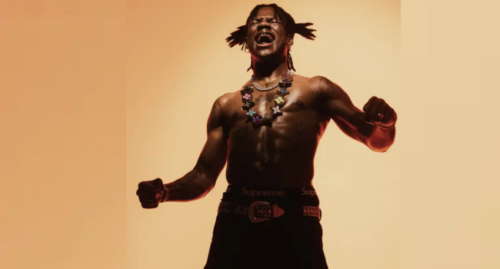
In the end, these artists demonstrate that global success does not have to come from cultural compromise, but from cultural confidence. Their strongest records still sound like home, even as they travel far beyond it, because they are anchored in memory, place, and intention. They prove that Afrobeats does not need to abandon its roots to grow outward. When artists understand themselves fully, the music carries that certainty wherever it goes, ensuring that global reach becomes an extension of identity rather than a replacement for it.
Conclusion: Recognition Is Good, Ownership Is Power
Western validation has undeniably shaped the way Afrobeats is perceived globally, creating opportunities that were once unimaginable for African artists. Chart placements, Grammy nominations, late-night television appearances, and international festival stages all offer moments of visibility that signal achievement beyond local borders. These milestones are not insignificant—they provide financial leverage, networking opportunities, and cultural visibility that can amplify an artist’s career. More importantly, they give the world a chance to see African creativity as sophisticated, influential, and commercially viable on a scale that commands attention. Recognition, however, is inherently temporary. A chart ranking or an award can elevate a song for a moment, but it cannot secure the long-term cultural or structural integrity that allows a genre to thrive independently. Without deeper roots, these moments of applause risk being fleeting flashes rather than lasting transformations.
That deeper root is ownership, the element that ensures Afrobeats does more than merely travel—it endures. Ownership is about more than rights to sound recordings or revenue streams; it is about authority over narrative, identity, and creative direction. African ownership guarantees that decisions about the genre’s future, its sound, and its storytelling remain grounded in the communities that created it. Afrobeats did not need external permission to exist, nor does it need to dilute its cultural specificity to be heard internationally. Its rise happened because the music spoke from a place of authenticity, reflecting lived experiences, local vernacular, and communal energy. Audiences around the world did not fall in love with a sanitized or generalized version of Afrobeats—they responded to its particularity, its confidence, and its unapologetic rootedness. Ownership ensures that as the genre expands, it continues to carry that authenticity with it.

If the trajectory of Afrobeats is guided primarily by Western markers of success, the genre risks redefining its own priorities to fit external expectations. Charts, awards, and playlist placements are designed to measure immediate consumption, not lasting cultural impact. They capture the popularity of a moment, not the sustainability of a movement, and they often prioritize universality over cultural specificity. When these external systems become the primary arbiters of value, there is a subtle but significant pressure on artists to conform—to smooth accents, generalize lyrics, or adjust rhythms to match global tastes. Such compromises may produce short-term gains but risk eroding the very qualities that made Afrobeats distinctive and powerful in the first place. Ownership acts as a counterbalance, allowing artists and audiences to define relevance on their own terms rather than by the metrics of foreign institutions.
Central to ownership is the continued prioritization of African audiences. These listeners are more than consumers; they are co-creators of the culture, sustaining it through engagement, memory, and critique. Local audiences decide which songs resonate, which artists achieve longevity, and which cultural innovations are meaningful versus transient. They carry forward the historical context of the music, remember its evolution, and provide the kind of accountability that global markets rarely, if ever, can. By keeping home audiences at the center of Afrobeats’ development, the genre preserves its emotional depth, creative freedom, and cultural specificity, ensuring that it continues to evolve in ways that feel organic rather than externally imposed. Ownership rooted in local engagement allows Afrobeats to thrive globally while remaining unmistakably African.
Ultimately, recognition is a moment, but ownership is power, and power is what ensures a legacy. Global applause fades, trends shift, and attention moves elsewhere, but a culture that maintains control over its narrative endures. Afrobeats has already proven that it can command the world’s attention without losing its identity, and the future of the genre will depend on sustaining that balance. African ownership ensures that the genre’s story, success, and growth remain firmly in the hands of those who built it, even as it reaches the farthest corners of the globe. When ownership is prioritized over validation, Afrobeats does more than win awards or climb charts; it secures its place in history, shaping not only what the world hears but how it remembers the sound, the people, and the culture that created it.
Read More: Ayra Starr Wows Fans with Rihanna’s ‘Stay’ Karaoke Performance on Livestream
The post Western Validation vs African Ownership in Afrobeats: Who Defines Success, Identity, and the Future of the Sound appeared first on tooXclusive.
Disclaimer:The opinions presented in this post are those of the mentioned author. The content has been sourced from TooXclusive, with due attribution to the company.
If you wish for us to take down this content, kindly get in touch as soon as possible. This material is shared strictly for promotional purposes only.